Grid expansion, management critical as South Africa’s electricity sector decentralises

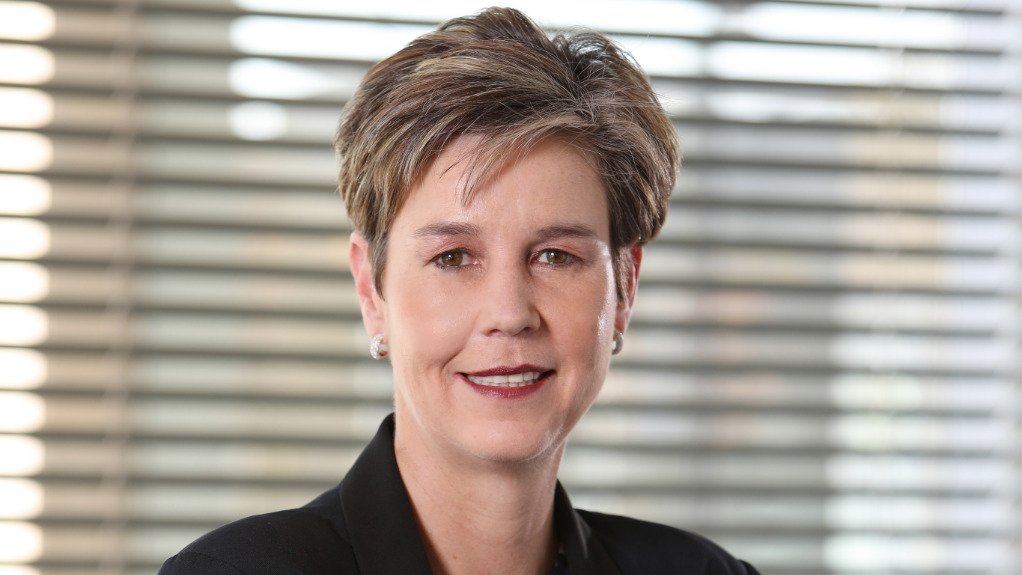
Standard Bank Corporate and Investment Banking head of power and renewables Rentia van Tonder



Improved cost efficiencies, shifts in legislation and policy enablers towards an open market continue to support South Africa’s investment in renewable-energy projects, Standard Bank Corporate and Investment Banking head of power and renewables Rentia van Tonder tells Engineering News.
In an interview ahead of this year’s Africa Energy Forum (AEF), to be held in Cape Town from June 16 to 19, she pointed out that, with open access, enabling policies and the emergence of alternative options around energy trading, corporate entities were increasingly shifting their focus to flexibility, cost efficiency and the sustainability of energy supply.
Van Tonder said there had also been an uptake in private offtake projects, driven by sustainable security of supply with consideration of current grid capacity constraints and evolving market dynamics. The anticipated implementation of the South African Wholesale Energy Market, which was expected to be formally implemented towards the end of this year, was a key factor in driving these projects.
She, therefore, expects the number of new private and utility-scale projects to continue growing.
Van Tonder stated that energy traders played an important role in driving this shift, owing to their ability to link supply to demand, thereby enabling a diverse supply of energy generation projects.
Traders can procure power from a variety of energy sources, including wind, solar, battery energy storage system and other technologies, while also being able to sell that power to multiple offtakers.
“Different offtakers have different demands and traders can create a market or a solution for specific clients, and I think that's what we see. Flexibility is becoming more and more a theme for our offtakers and our clients.”
Additionally, she highlighted that there had been a significant uptake of renewable energy in the residential sector in recent years, with about 6 GW to 7 GW of rooftop solar having being installed. This had also played a key role in driving this shift and addressing energy shortages.
Van Tonder noted, however, that there were some challenges hindering the successful rollout of renewable-energy projects in the country, such as the slow rollout of new transmission infrastructure, skills shortages amid local contractors, as well as delays in executing projects at pace owing to the volume of developments under way.
Therefore, as South Africa looked to deliver on its goal of establishing 14 500 km of new powerlines as part of the Transmission Development Plan (TDP), Van Tonder stressed the need to fast-track the rollout of new transmission projects.
She emphasised the need for stakeholders and policymakers to acknowledge the need to unlock bankability and enable faster implementation of transmission projects.
She argued that the right structures and mechanisms needed to be put in place to fast-track the TDP goal, adding that this would not only support South Africa, but also enable better regional integration.
She warned that driving a wholesale and traded market without having the relevant transmission infrastructure in place could lead to many lost opportunities.
Van Tonder explained that many transmission projects had been stalled owing to issues such as a lack of clear confirmation about the timing of transmission expansion implementation.
She added that, while Eskom had acknowledged the fast-tracking of grid infrastructure expansion as a key priority, delaying any immediate infrastructure development risked hindering economic growth.
“The urgency is now. Modernised grid expansion is absolutely critical,” she asserted, adding that there was a need for a holistic approach towards grid management, optimisation, stabilisation and efficiency improvements to limit losses and support overall demand-supply management, owing to the intermittency of renewables.
Hence, she argued that modernised grid expansion was critical for effective demand-supply management, emphasising the need for investment in appropriate technologies in this regard, including battery energy storage.
“It's not only about putting more transmission lines down, but also about the overall management of the system.”
When asked whether South Africa was on track to meet the TDP goal of building 14 500 km of new powerlines by 2034, Van Tonder said that, while progress had been slow, the goal was achievable.
“We're out of our first starting blocks. We are moving forward, if we could get the first round of independent transmission projects going, through the first bidding round, that would certainly create more momentum.
“It may be slow, but it’s important to ensure the [National Transmission Company South Africa's] Independent Transmission Projects programme is bankable; I remain positive.”
STANDARD BANK’S ROLE
Van Tonder, meanwhile, highlighted the importance of collaboration and financiers in driving this expansion in renewables, noting that Standard Bank had been proactive in the space.
She explained that Standard Bank had played a pivotal role in the shift to renewables across the entire ecosystem, particularly in utility-scale projects, highlighting that the firm had provided over R47-billion in funding for projects over the last 18 months.
Van Tonder said that, while the bulk of this amount sat within local projects, the financial services provider had also made significant progress in funding projects in countries such as Zambia, Namibia, Eswatini and Kenya.
“As we see the momentum building, we get more and more excited about the opportunity as markets are opening up and technologies are advancing,” she said.
She highlighted that Standard Bank was supporting utility-scale projects with key developers and sponsors, looking at a range of projects including BESS.
Additionally, the company is also proactive in supporting projects through bilateral power purchase agreements with larger corporate entities, such as mining companies; however, a shift towards aggregators and traders had been clear.
Standard Bank is also looking at unlocking opportunities in the wheeling and energy trading space, with the company having provided funding support to energy traders to support project bankability through liquidity support structures to enhance bankability.
Van Tonder said the company was also working with its clients who were seeking opportunities across the ecosystem, including suppliers and support services, to unlock growth in the renewable-energy sector.
“We are proactive, we are partnering with our clients in a way where we are their trusted adviser. We work with them early on to be able to find ways to be innovative, solution-driven and absolutely client-centric; this goes beyond one project, driving growth through a deliberate focus.”
Standard Bank is a lead sponsor at this year’s AEF.
Under the theme 'Building Africa’s Industrialised Future,’ the event aims to highlight and drive conversations around pragmatic, diversified energy solutions to support industrialisation, bringing together various players in the energy and renewable sectors.
Van Tonder described the forum as a key event for Standard Bank, noting that the company hoped to connect with its clients, as well as conclude some of its transactions.
She said the company was planning to hold signing ceremonies for transactions and to advance discussions across the focus areas.
“We use the forum as a platform to showcase, to connect and also to provide insights to new clients and to attract new clients,” she said.
Article Enquiry
Email Article
Save Article
Feedback
To advertise email advertising@creamermedia.co.za or click here
Research Reports
Projects

Latest Multimedia


Latest News


Showroom

Established in 1933, EKATO is the world leader in agitation technology, supplying agitators for processes and applications such as chemicals and...
VISIT SHOWROOM
Stewarts & Lloyds is a leading steel, tube, and engineering product supplier in South Africa.
VISIT SHOWROOM

Press Office
Announcements
What's On
Subscribe to improve your user experience...
Option 1 (equivalent of R125 a month):
Receive a weekly copy of Creamer Media's Engineering News & Mining Weekly magazine
(print copy for those in South Africa and e-magazine for those outside of South Africa)
Receive daily email newsletters
Access to full search results
Access archive of magazine back copies
Access to Projects in Progress
Access to ONE Research Report of your choice in PDF format
Option 2 (equivalent of R375 a month):
All benefits from Option 1
PLUS
Access to Creamer Media's Research Channel Africa for ALL Research Reports, in PDF format, on various industrial and mining sectors
including Electricity; Water; Energy Transition; Hydrogen; Roads, Rail and Ports; Coal; Gold; Platinum; Battery Metals; etc.
Already a subscriber?
Forgotten your password?
Receive weekly copy of Creamer Media's Engineering News & Mining Weekly magazine (print copy for those in South Africa and e-magazine for those outside of South Africa)
➕
Recieve daily email newsletters
➕
Access to full search results
➕
Access archive of magazine back copies
➕
Access to Projects in Progress
➕
Access to ONE Research Report of your choice in PDF format
RESEARCH CHANNEL AFRICA
R4500 (equivalent of R375 a month)
SUBSCRIBEAll benefits from Option 1
➕
Access to Creamer Media's Research Channel Africa for ALL Research Reports on various industrial and mining sectors, in PDF format, including on:
Electricity
➕
Water
➕
Energy Transition
➕
Hydrogen
➕
Roads, Rail and Ports
➕
Coal
➕
Gold
➕
Platinum
➕
Battery Metals
➕
etc.
Receive all benefits from Option 1 or Option 2 delivered to numerous people at your company
➕
Multiple User names and Passwords for simultaneous log-ins
➕
Intranet integration access to all in your organisation